
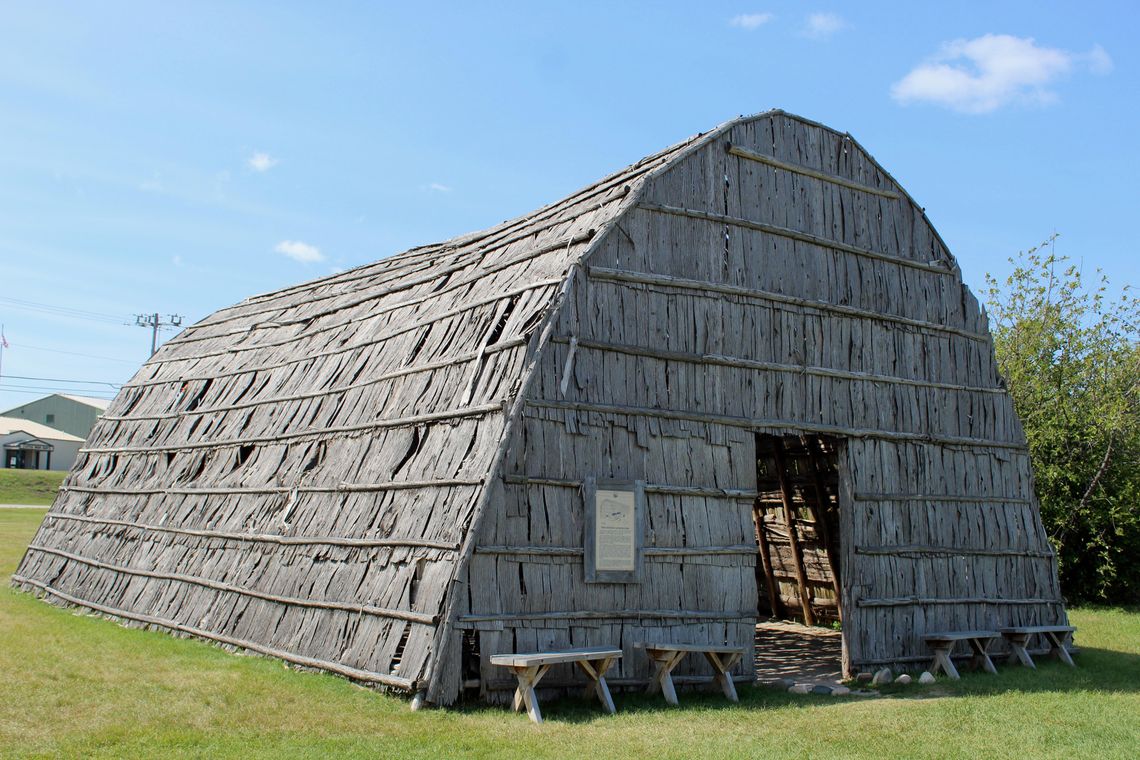
The Mackinac Straits region – Center of the Freshwater World – has for centuries been a busy crossroads for people and commerce. Long before the first Europeans stepped upon its heavily forested shores, the Anishinaabe already had a thriving economy, communities, and culture here. They hunted, fished, and foraged the area’s abundant natural resources, and had a vast trade network throughout North America using the Great Lakes region’s wealth of water-based trade routes – from Lake Huron to the east, Lake Michigan to the west, and along the inland lakes and rivers feeding the basin.
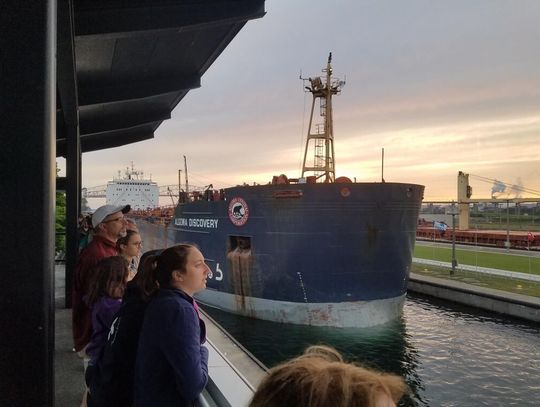
When the first French explorers and fur traders arrived in the area in the 17th century, they used the same waterways as the Indigenous Tribes to further explore the interior of the Great Lakes region and to export beaver pelts procured by Indigenous peoples to buyers in the east. The voyageurs traded a variety of goods with the Indians, including guns, tools, and wool blankets in exchange for the furs, which were then transported via canoe to the northeastern population centers at the time, including Montreal and Quebec City. It should come as no surprise, then, that the water routes once used by the Native Tribes and voyageurs are still used to transport coal, iron ore, limestone, salt, and grain on massive freighters to ports throughout the Great Lakes region and beyond. Today, these same waters also provide a host of recreational opportunities in what is now one of the Midwest’s premier vacation destinations.
It was in 1671 that French Jesuit priest Father Jacques Marquette founded a mission on Moran Bay, naming it St. Ignace in honor of St. Ignatius Loyola, the founder of the Jesuit religious order. Marquette was an unusual missionary in that he endeared himself to the Native peoples, amongst whom he lived, by learning their languages and customs. And while he was assigned to bring Catholicism to them, he also honored and respected their beliefs and traditions. The rich history and vibrant culture of the Odawa, Ojibwa, and Huron, who inhabited the area, continue to influence it to this day.
In 1683, the French built a military outpost in St. Ignace known as Fort deBuade to protect the interests of the fur traders. The area had become the center of the Great Lakes fur trading economy, and St. Ignace had become among the largest settlements in what was then known as New France. Its economic importance was such that the Straits region experienced the rule of three different nations for 130 years. When the French were defeated during the Seven Years War, 1754-1763, the British took overrule of the area until the United States took possession of Mackinac Island and Fort Michilimackinac after winning its independence in the American Revolution. However, when war broke out between the U.S. and Great Britain in 1812, the British again took possession of the fort on Mackinac Island, and it wasn’t until the signing of the Treaty of Ghent in 1814 that Fort Mackinac was reclaimed by the U.S.
With the decline of the fur trade in the mid-1800s, commercial fishing and logging became the primary economic drivers in the Straits area. The first sawmill in St. Ignace was built in the 1870s, and rail ferry service connecting the rail lines of the Upper and Lower Peninsulas was established in the 1880s. The Martel Furnace Company, a smelting operation that made quality steel, also began production in St. Ignace in the 1880s, further adding to the local economy.
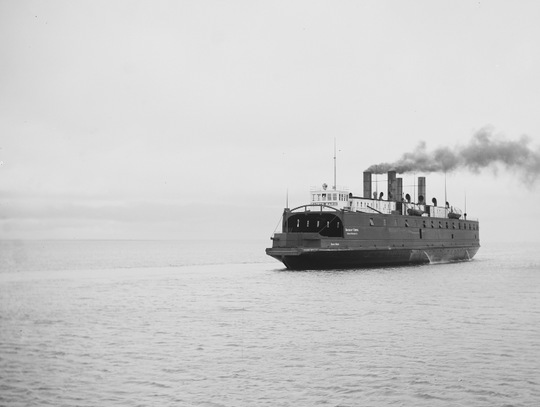
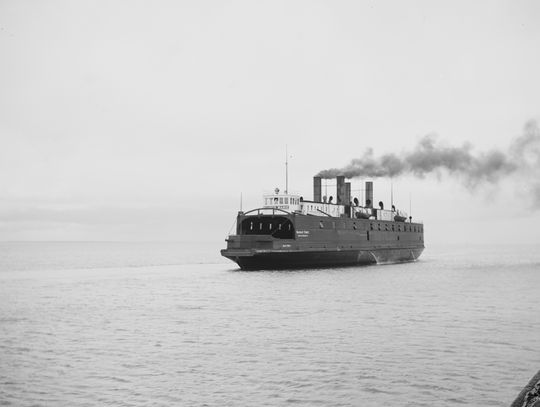
In 1888, all-season ferry service began with the launching of the railroad ferry, St. Ignace. It had a propeller at its bow, which allowed it to break ice ahead of it, opening year-round transportation in the Straits of Mackinac.
Car ferry service across the Straits of Mackinac began in 1923. Drivers wishing to travel to the Upper Peninsula would line up to wait for a ferry to take them across the five-mile-wide strait, which took about 45 minutes. However, during the peak summer season or on the opening day of deer season, drivers and their vehicles would frequently have to wait hours for a ferry. But with the opening of the Mackinac Bridge in 1957, the gateway to the north blew wide open. What once took hours to accomplish would now take only minutes, encouraging further development of the tourism economy and introducing generations of a new type of explorer to the area – vacationers.
FOR THE HISTORY BUFF
If you or someone you’re traveling with loves history, consider making a stop at one or more of these historical sites in St. Ignace:
Kiwanis Beach
This historic site once served as the original Native settlement in the area
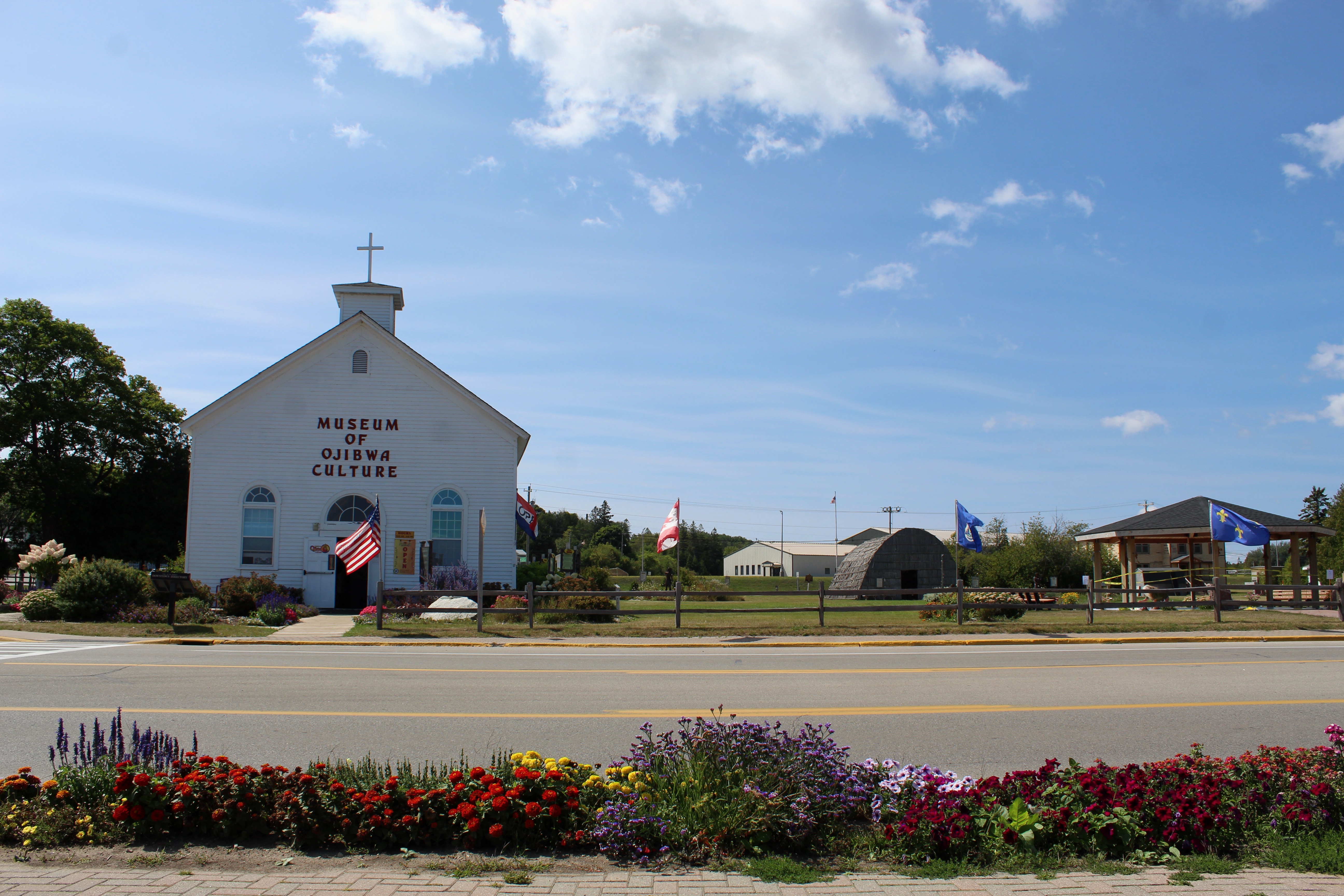
Museum of Ojibwa Culture
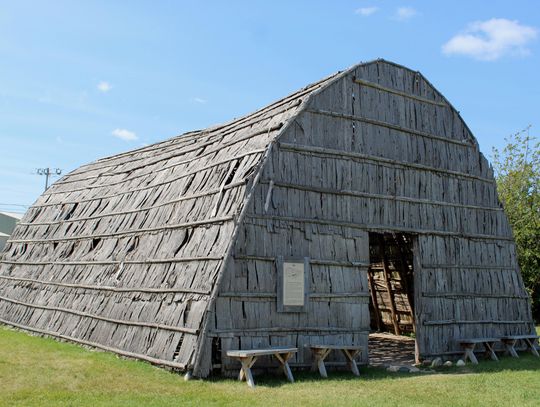
Here you’ll learn the history of the 17th-century Huron Indian Village, Father Marquette’s French Jesuit Mission, and local Ojibwa Indian traditions and culture.
Historic Totem Village
Touted as Michigan’s oldest and largest American Indian gift shop. This cultural landmark offers authentic native and crafted gifts, art, and cultural artifacts rooted in Odawa and Ojibwe heritage.
City Dock #3
Also known as Coast Guard Park, this viewing pier once served as a railroad terminus at the Straits of Mackinac.
Wawatam Dock and Lighthouse
The Wawatam Lighthouse became an icon of St. Ignace in 2006 after being spared from demolition in Monroe, Michigan, and moved to the former railroad pier previously used by the Chief Wawatam train ferry.
Father Marquette National Memorial & New France Discovery Center
Located within Straits State Park, the memorial commemorates the life of Father Jacques Marquette. Father Marquette founded Sault Ste. Marie in 1668 and St. Ignace in 1671, and was crucial in early interactions between the indigenous people and French settlers. The memorial is set to reopen in July of 2026 following a closure to renovate and re-imagine the memorial.
Straits Cultural Center
The Michilimackinac Historical Society’s new museum is set to open to visitors in the summer of 2026.








Comment
Comments